Check a Garment’s Care Label Before Its First Wash
A care label garment check helps you choose a suitable first clean by spotting unclear instructions, vulnerable details and signs that need professional advice.
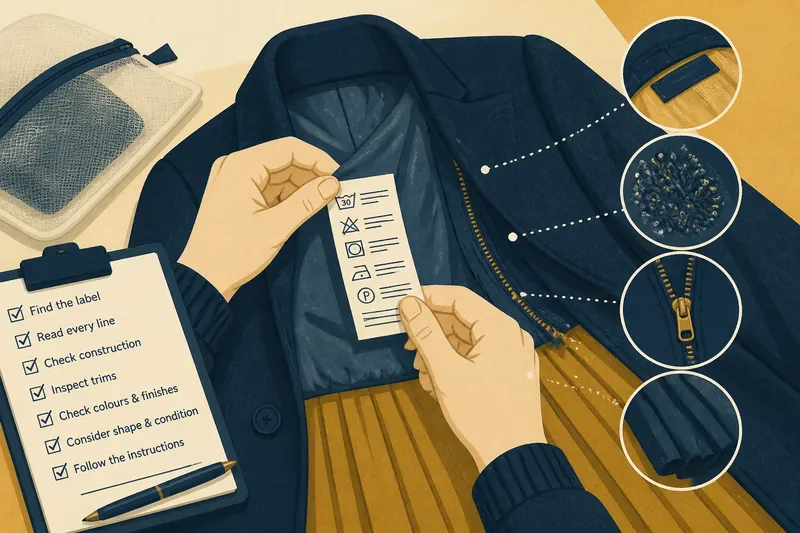
The most common first-wash mistake is deciding from the outer fabric alone. A care label garment check costs little time, but skipping it can leave a finish, trim or shape difficult to restore. Look at the whole garment before choosing how to clean it.
Find the care instructions before choosing a cleaning method
Labels may be sewn into a side seam, waistband, pocket or back neck. Check those places before deciding a label is missing. On a reversible garment, inspect both sides and the seams.
Read every surviving line and symbol. A clear washing instruction does not fill in a faded drying instruction. Do not borrow directions from a similar-looking item: a lined jacket and an unlined one can need different care.
- If the sewn label is present, read all its lines; if part is missing, use only the instructions you can confirm and seek advice before guessing about the rest.
- If the label is absent, check the paper tag or maker’s product information; if neither gives usable directions, ask the maker or a cleaner before washing a delicate or valuable item.
- If the label names a separate trim or lining warning, follow the more cautious instruction; if the scope is unclear, ask the maker or cleaner which parts it covers.
- If a symbol is unfamiliar, consult a reliable textile-care symbol key; if it remains unclear, do not choose a wash method by memory.
Use the garment maker’s instructions alongside the label when available. A recognised textile-care organisation’s symbol key can help distinguish similar marks on small, creased labels.
Use construction clues to assess care, not to guess at fibre behaviour
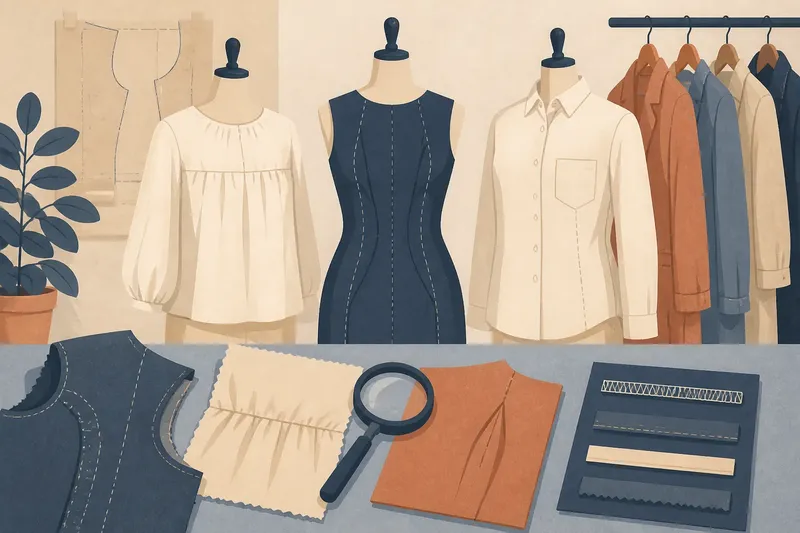
The purpose of this check is not to predict how a fibre behaves in general. It is to notice garment-specific details that can make a permitted cleaning method unsuitable in practice. A coating, bonded backing, lining, interfacing or pressed-in pleat may need care different from the visible outer cloth.
Read the full composition, including any note such as “exclusive of trims”. Then inspect what is actually attached: a lining, crisp coating, raised pile or structured section. These details do not prove that a garment cannot be washed; they are reasons to follow its specific care instruction rather than infer one from the fibre list.
- If a finish looks crisp, bonded or raised and the care directions are missing, do not soak or scrape it; ask the maker or a cleaner familiar with the garment type.
- If a pleat, lining or structured section has its own instruction, follow that instruction as well as the main label; if the directions conflict, pause and ask which method suits the complete garment.
Inspect trims, fastenings and visible weaknesses
In good light, check buttons, beads, sequins, embroidery and metal hardware for loose threads, cracked coatings or lifted decoration. Look at how each feature is attached. Sewn-on trim can still be fragile, while adhesive-backed details may be vulnerable to moisture or heat.
Check zips and hooks for snag risks. Close them before washing only if the label permits that method. A suitable wash bag can limit rubbing or tangling, but it cannot make an unsuitable wash safe.
- If a button or decoration is loose, do not pull it to test the attachment; set the garment aside for repair or ask a cleaner how to protect it.
- If an open hook or zip could catch another fabric, close it if the label allows; if it cannot be secured, wash separately only when the care instruction permits washing.
- If trim is cracked, lifted or sharp, avoid a casual home wash; if the item is worth preserving, ask a repairer or cleaner about the safest next step.
Check for colour-transfer and finish concerns
Contrasting panels, dark linings and vivid colours deserve attention before washing. Colour may move between sections through rubbing or prolonged damp contact. Do not treat a quick wet-cloth rub as permission to proceed: it can mark the cloth and may not reveal what happens during a full wash.
Follow the label if it permits washing. Keep the first wash separate from incompatible laundry when practical, and do not leave a wet garment crumpled. A water-repellent finish, metallic print or delicate coating is another reason to avoid unapproved detergent, stain remover or heat.
- If the label permits washing and the garment has contrasting colours, wash it separately when practical; if the colours are already transferring or the instructions are unclear, stop and seek advice.
- If a special finish is visible, use only products and methods allowed by the maker; if none are specified, ask before applying stain remover or fabric softener.
Consider shape and condition before cleaning
Look for details that depend on shape: a sharp crease, gathered waist, pleats, padded shoulder, shaped cup or structured collar. Check the label for drying directions, since hanging, laying flat and other methods can affect how those features sit.
Inspect seams and hems for puckering, loose stitching or a lining that pulls. These signs suggest an existing weakness, not a reason to tug the garment straight. If repair is needed, cleaning first may complicate the work.
Say you have a pleated skirt with a sewn-in lining and a zip. Its label permits a gentle machine wash but says to line dry. You inspect it and find the zip secure, the pleats intact and the lining lying flat. You then close the zip, use a suitable wash bag if the label allows one, and line dry as instructed. If the same inspection instead revealed a loose pleat or a pulling lining, the decision would change: pause and ask a cleaner or repairer before washing. The visible cloth alone does not settle the choice.
Which care-label questions change the decision?
Can I wash a garment if its label is missing?
Only if you can establish a suitable method from reliable information about that garment. For a lined, coated, trimmed or valuable piece, ask the maker or a professional cleaner rather than guessing from its appearance.
Should I wash a new garment before wearing it?
There is no single answer for every item. Check its care instructions and consider your own sensitivities and any visible residue or strong odour, then choose a permitted method or ask a qualified cleaner if the label is unclear.
What should I do if the label says professional cleaning only?
Do not test a home wash on a hidden area. Take the garment to a cleaner and point out stains, trim, loose details and any concerns about colour or shape.
Does a mesh wash bag make a delicate garment safe to machine wash?
No. It can reduce tangling and abrasion only when machine washing is allowed. It cannot settle questions about water, detergent, heat or shape, so follow the garment’s instructions first.
Skip checks that cannot change your choice
Repeated sniffing, rubbing a hidden spot or searching for a universal “gentle” setting will not replace the care instructions. Removing every detachable button or trim piece is not useful unless the maker or label advises it. Focus on evidence that affects the decision: the complete label, garment construction, attached details and visible weaknesses.
For a useful care label garment check, keep a clear photo of the instructions before they fade and note the maker or style name if available. If the garment still leaves an important care question unanswered, a qualified cleaner can assess its construction before you risk a home wash.