Cotton, Wool or Linen? Start with the Fabric's Job
Compare cotton, wool and linen by texture, drape and structure so you can choose a fabric that gives your garment the shape and movement you want.
The most common mistake when choosing cotton, wool or linen is treating the fibre name as a promise about how a garment will feel and hang. A crisp linen shirt and a soft linen knit can behave very differently, so choosing by name alone may leave you with a shape or texture you did not want.
Start with the fabric’s job. Should it skim the body, hold a clean outline, feel cosy or fall into relaxed folds? Fibre describes the raw material; weave, knit, yarn and finishing shape the cloth you see and touch. For choosing fabric, those visible and tactile qualities matter more than general rules about a fibre.
Read the cloth, not just the fibre label
Cotton, wool and linen cover many kinds of fabric. Cotton can be woven into crisp poplin, brushed into flannel or knitted into jersey. Wool can feel airy and springy in a fine knit, or dense and firm in a coating. Linen may be smooth and compact, loose and flowing, or marked by visible slubs.
Construction helps explain the differences. In woven cloth, yarns cross one another; a tight, even weave often feels more stable than a loose one. Knitted loops usually give more than woven threads, although the amount varies. Yarn thickness and finishing also affect a fabric’s surface, weight and softness.
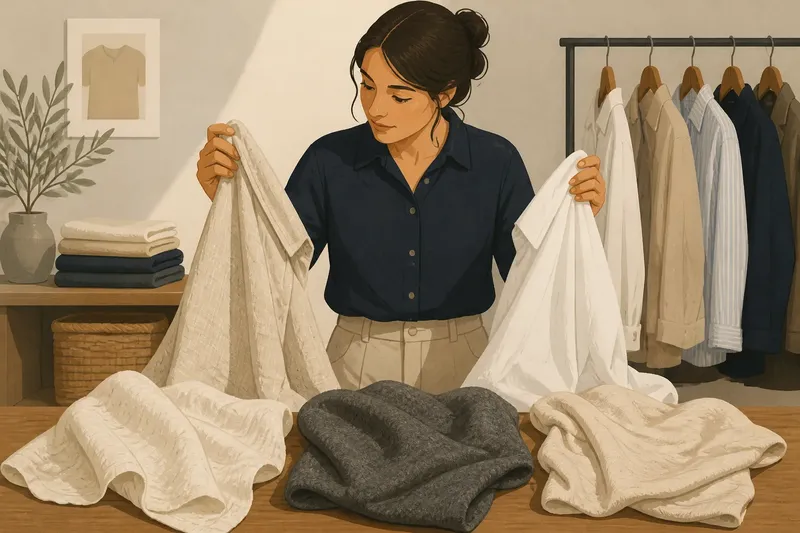
If you can handle a garment, scrunch a small area lightly and release it. Notice whether it springs back, holds a crease or drops into folds. Hold it up and watch how it hangs. These cues will not tell you everything, but they make a useful comparison between the actual fabrics in front of you.
Cotton offers familiar comfort and adaptable structure
Cotton is a useful starting point for everyday garments because it comes in many weights and textures. Cotton poplin may feel smooth and crisp; cotton jersey usually stretches and follows the body more closely. Cotton twill can feel sturdier and create a more defined line.
For a shirt or trousers that should look tidy, a firmer cotton weave may support a clean outline. For a relaxed top, a softer knit may feel easier to move in. The trade-off is that cotton can crease, and the cloth’s structure determines whether it hangs close or holds its form.
Choose by the specific surface and shape you want. If you prefer a sharp outline, look for a cloth with enough body to hold one. If you want a softer fall, compare how a lighter cotton hangs rather than assuming all cotton behaves alike.
Wool brings spring and shape in different weights
Wool is useful when you want a fabric with resilience and shape, but it is not limited to heavy winter clothes. A fine wool jersey can move with the body, while woven wool suiting can hold a sharper line. Dense coating cloth creates a more substantial silhouette.
The fibre name does not tell you whether a garment will feel soft against the skin. Yarn, finish and individual sensitivity all play a part. If texture matters to you, feel the fabric at the neck or wrist before choosing it.
Focus on how the cloth responds to movement. A springy fabric may recover its shape after being handled, while a dense one can keep a more structured outline. Neither is automatically better: the right choice depends on whether you want a garment to follow the body or stand away from it.
Linen gives garments a dry hand and relaxed folds
Linen is often chosen for its crisp, dry feel and its relaxed folds. It can suit warm-weather shirts, loose trousers and dresses where rumpling belongs to the look. A lightweight, open weave may move freely; denser linen can feel more substantial and hold a straighter shape.
Creasing is part of linen’s appearance. If you want a consistently smooth surface, its tendency to rumple may frustrate you. If you enjoy a garment that looks relaxed as the day goes on, those creases may suit your taste. The initial feel also varies with yarn and finishing.
For a crisp outline, compare linen cloths with enough body to hold their shape. For a softer fall, notice how a lighter or looser fabric hangs. The word “linen” alone cannot tell you whether a particular garment will feel compact, airy or fluid.
Choose a fabric by the behaviour you want
Before comparing fibre names, decide how you want the garment to move and what shape it should keep. Then compare the feel against your skin, the cloth’s structure and the surface you prefer. A useful choice matches the garment’s intended role and your taste.
- For a crisp shirt: Check whether cotton poplin feels firm and even or linen feels drier and more textured. If you want a polished surface, choose the cloth with the smoother appearance; if you welcome visible rumpling, consider linen.
- For a close-fitting top: Check how far cotton jersey or fine wool knit gives when gently stretched and whether it returns to shape. If you want a close fit, choose the fabric with suitable stretch and recovery; if you want less cling, choose a more stable cloth.
- For a shaped layer: Check whether the wool cloth holds an outline when lifted and allowed to fall. If it keeps the structure you want, it may suit a tailored layer; if it collapses into soft folds, consider a more relaxed design.
- For a loose summer garment: Check how lightweight linen and light cotton hang. If you want dry texture and welcome creases, choose linen; if you prefer a more even surface, consider cotton.
- For a relaxed appearance: Check whether the fabric’s texture disguises small creases or makes them prominent. If you like a lived-in surface, choose a visibly textured cloth; if not, look for a smoother fabric that keeps the outline you prefer.
- For a soft feel: Check the fabric against the skin rather than relying on the fibre name. If it feels comfortable at the neck or wrist, it remains a candidate; if it feels scratchy or stiff, choose another cloth or a design that keeps it away from sensitive areas.
Say you want a loose shirt for warm days and prefer a smooth appearance. You compare cotton poplin with linen, holding each shirt by the shoulder and letting the fabric fall. The poplin hangs in a cleaner line, while the linen shows a drier texture and softer folds. If the smooth surface matters more than relaxed movement, the poplin is the better match; if you decide that airy folds matter more, linen is the trade-off you may prefer.
How do cotton, wool and linen compare?
Which fabric drapes most softly?
There is no fixed order because weave, knit, weight and finishing change the result. Loose linen can fall fluidly, soft cotton knit can cling, and fine wool can move with a gentle spring.
Which fabric holds its shape best?
Look at the specific cloth rather than ranking fibres. A dense wool coating or firm cotton weave may hold an outline, while a loose weave or soft knit may fall closer to the body.
Does linen always feel rough?
No. Linen can feel crisp or dry, but yarn and finishing affect its surface. Handle the garment itself if softness is important to you.
Is wool only for cold weather?
No. Wool comes in fine knits and lighter fabrics as well as dense, warm cloth. Its weight and construction shape how it feels and hangs.
Make the comparison about the garment’s shape
It is not worth trying to identify a universally best natural fibre by touch alone. A finish can alter the surface, and a cloth that feels appealing in a shop may still create a shape you do not want. Compare what you can observe: how the fabric falls, whether it springs back, how it feels against your skin and whether its texture suits the garment.
For cotton, wool or linen, use the fibre name as a starting clue, then choose by the cloth’s actual structure and movement. If you searched for cotton wool linen fabric, compare specific fabrics by the outline and surface you want rather than expecting one fibre to suit every garment. That keeps the decision centred on the way you want the finished clothes to look and feel.