The Size on the Tag Is Not a Fit Verdict
Clothing size labels cannot settle fit. Learn to read garment proportions and ease so you can judge comfort, movement and balance more clearly.
The common mistake is buying the size you usually wear and treating the label as a verdict; the cost is a garment that pulls, sags or feels wrong despite matching your familiar number. Clothing size labels are only a starting point. Garment proportions and ease—the room built into a garment beyond the body’s measurements—give better clues about how it may fit.
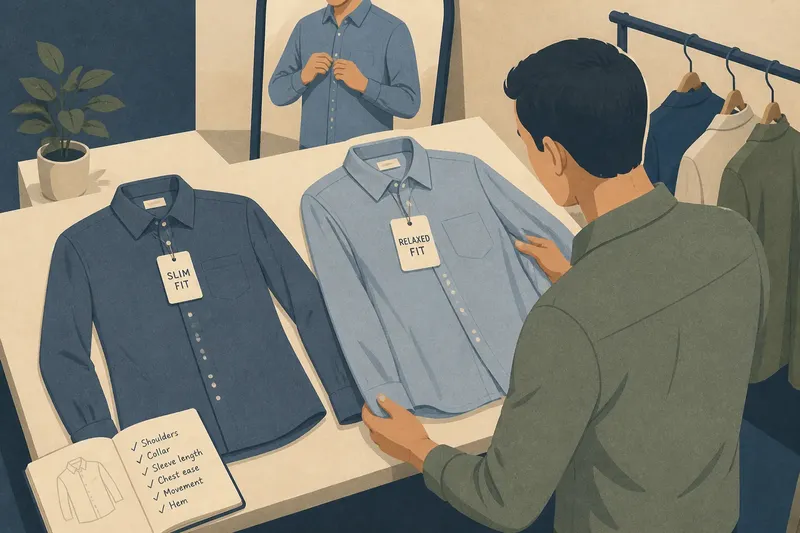
Say you are choosing a woven shirt for an ordinary workday. In this invented situation, your usual size fits comfortably across the shoulders in one brand, but the same label in another shirt comes with a tight upper back and sleeves that catch when you reach. Rather than sizing up automatically, you compare the shirts’ shape, intended ease and fit at the places that matter to you. The result you are looking for is not a particular label: it is a shirt that sits well at rest and allows ordinary movement.
Begin with the garment’s intended shape
A size label tells you which sizing system a maker has assigned to the garment. It does not tell you whether the cut is slim, relaxed, cropped or oversized, nor does it reveal every proportion. Even within one brand, styles can be designed for different silhouettes. A close-fitting shirt and a boxy shirt may carry the same size while offering very different amounts of room.
Look for the product description and the garment’s visible shape. A slim cut is meant to follow the body more closely; a relaxed cut leaves more room through areas such as the chest and waist. “Oversized” describes an intentionally generous silhouette, not necessarily a reason to choose a smaller size. Dropping a size to reduce its volume may also narrow the shoulders or shorten the sleeves.
In the imagined shirt purchase, the first shirt is labelled with your usual size, but its description says slim fit. The second bears the same label and is described as relaxed. That information changes what you expect: the first may feel closer through the torso, while the second may have more ease without needing a larger size.
Read proportions where the garment meets the body
Proportion means the relationship between parts of a garment: shoulder width to sleeve length, torso length to waist position, or rise to leg length. A garment can have enough overall room and still feel unbalanced if one of these relationships does not suit your body. This is why simply moving up or down a size can solve one problem while creating another.
For a shirt, start with the shoulder seams. They usually sit near the edge of the shoulder on a conventional cut, though a dropped-shoulder design is meant to sit further down. Check that the collar rests without choking or gaping, and that the sleeves reach where you prefer when your arms are relaxed. Then look at the torso: does the hem meet the intended part of your body, and does the shirt hang smoothly rather than bunching or flaring unexpectedly?
For trousers, useful reference points include the waistband, rise and leg shape. A waistband that feels secure when you stand may dig in when you sit. A high-rise cut is meant to sit higher on the body than a low-rise cut, so the same labelled size can feel quite different. Check whether the rise and leg opening match the style you want, rather than assuming all discomfort means the waist needs a different size.
Use ease to judge comfort and movement
Ease is the difference between your body and the garment’s finished dimensions. Some ease lets you move and breathe; wearing ease is the room intended for ordinary comfort. Design ease shapes the silhouette, creating a closer line or more volume. The useful amount depends on the fabric, cut and purpose of the garment. A stretch jersey top and a crisp woven shirt do not need to behave alike.
When trying on the invented shirt, you button it without forcing the placket and notice whether the fabric pulls across the chest. You reach forward as if taking something from a shelf, then sit and stand. If the upper back restricts that movement while the waist has excess fabric, the issue may be the shirt’s proportions, not an overall shortage of room. A different cut could suit better than a larger size, which might leave the shoulders too broad and the sleeves too long.
Use a mirror from the front and side, but pay attention to sensation as well as appearance. Small folds can be part of a design; persistent tension, pinching or a hem that shifts sharply with ordinary movement may signal a mismatch. Fabric also affects the result: a woven material generally has less give than a stretch knit, so a close-looking fit may feel different in each.
Make the next choice from the evidence
By the end of the imagined try-on, you have not treated the label as useless. You have used it to locate a likely starting point, then assessed the actual shirt. The first option restricts your reach across the upper back. The relaxed-cut option hangs more comfortably, though its sleeves are longer than you prefer. You choose between trying another cut and accepting a sleeve length you like less; you do not assume the next size down will preserve the fit everywhere else.
If shopping online, compare the seller’s garment measurements with a similar item you already wear comfortably. Lay that item flat and measure the relevant points, such as chest width or sleeve length, using the seller’s stated method. These are garment measurements, not body measurements, so compare like with like. Product photographs and model details can suggest a silhouette, but they cannot replace measurements or a clear returns policy.
For alterations, distinguish between a local adjustment and a cut that is fundamentally wrong for you. A hem that is too long may be straightforward to alter; shoulder width or armhole placement can be more complex. Ask a qualified alterations professional about feasibility before buying an expensive piece that needs substantial changes.
Which fit questions matter more than the label?
Should I always buy the same size in one brand?
Use your usual size as a starting point, then check the specific garment’s cut and measurements. Different styles can have different proportions even when the label matches.
Does a larger size always create more comfort?
No. It may add room in the torso while making the shoulders, sleeves or hem too large. A different cut can address a local restriction more neatly.
How can I tell whether a garment is meant to fit closely?
Look for terms such as slim, fitted, relaxed or oversized in the description, then check the shape and how it feels in movement. Stretch fabric can follow the body closely without feeling like a woven garment of the same outline.
Is it worth chasing a perfect fit everywhere?
Usually not. Decide which areas matter most for comfort and appearance, since small differences in drape or length may be acceptable. Where sizing, fibre content or care depends on the label or maker’s instructions, follow those details.
The useful question is not “What size am I?” but “How is this garment shaped, and does its ease work for me?” Clothing size labels help you start the search; the shoulders, rise, sleeve length and room to move help you finish it. For the next purchase, compare one garment you already like with the cut in front of you before letting a familiar tag make the decision.